How to Choose Your Haircut: Face Shape, Lifestyle & Getting It Right
Not every style suits every man. We break down how to read your face shape, factor in your lifestyle, and arrive at a cut that genuinely works for you.
Walk into any barbershop and you'll find the same magazines with the same haircuts. The mistake most men make is pointing at a photo and saying, "that one." The better question is: does that cut actually work for your face, your hair, and the way you live?
Step One — Know Your Face Shape
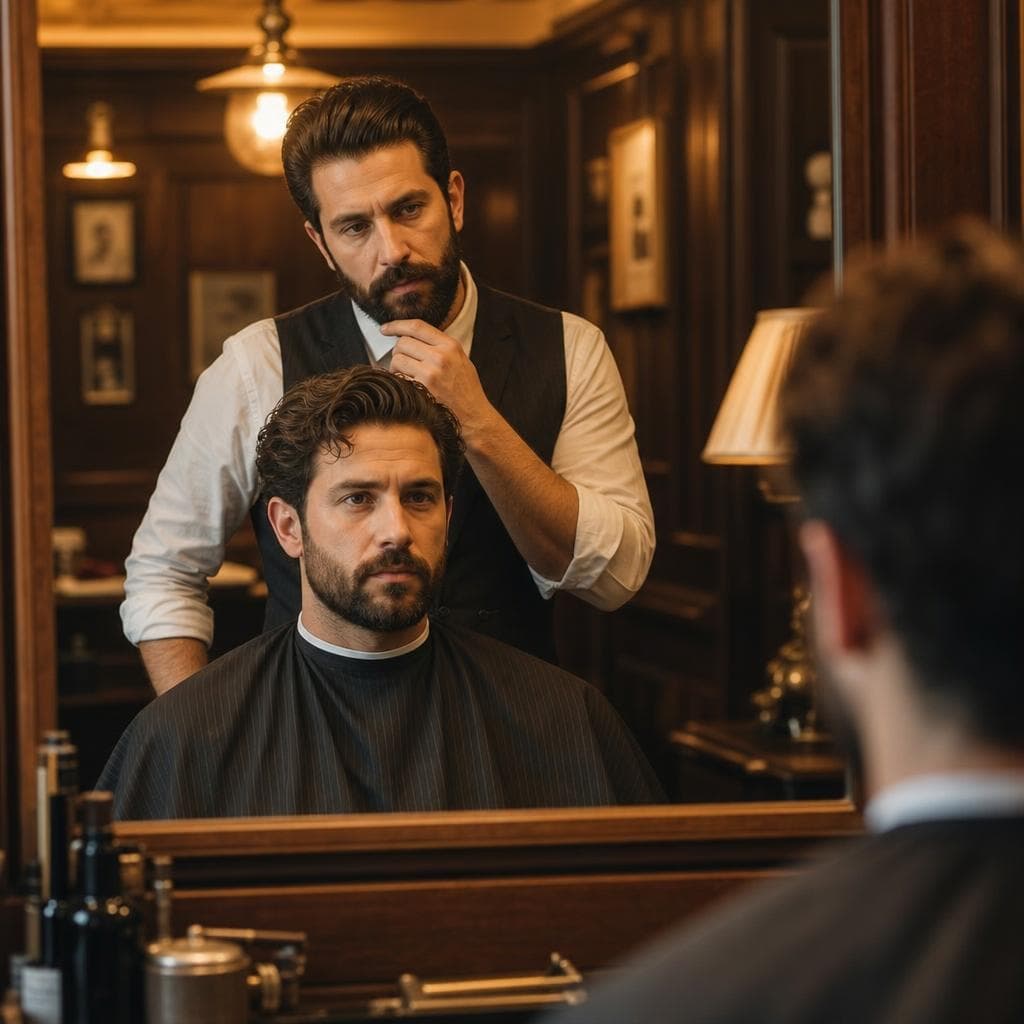
Your face shape is the foundation everything else is built on. Pull your hair back, look straight into a mirror, and trace the outline. Most men fall into one of six shapes — and once you know yours, the right cut becomes far more obvious.
Oval — The Most Versatile
Balanced proportions, slightly wider at the cheekbones, gently narrowing at forehead and jaw. If this is you, most cuts work in your favour. The main rule: avoid anything that adds excessive bulk on the sides or extreme height on top — these push your face out of its natural harmony.
Round — Build Length, Not Width
A round face is roughly equal in width and length, with soft angles. The goal is to create the illusion of length. A mid fade with volume on top — a textured quiff, a pompadour, a French crop with a longer fringe — works beautifully. Avoid very short all-overs that emphasise width, or horizontal partings that cut the face in half.
Square — Soften the Angles
A strong jawline and a forehead of similar width give the square face its powerful look. Textured cuts with length and movement on top provide a softer contrast to the jaw. Buzz cuts and very tight fades lean into the angles — great if you carry it well, less forgiving if not.
Oblong or Rectangle — Add Width
A longer face needs to borrow some width. Cuts that work with the sides — medium-length textures, side-swept styles, a classic side part — create horizontal balance. Avoid adding more height on top, and be cautious with tight fades that draw everything close to the head.
Diamond — Play Your Cheekbones
Narrow forehead, prominent cheekbones, narrow chin. The priority is adding width at the forehead and softening the emphasis on the cheekbones. Textured fringes and side parts that sweep across the forehead work well. Slicked-back styles that expose the full forehead can overstate what is already a striking shape.
Heart — Balance the Forehead
Wider forehead, tapering to a narrower chin. Adding volume and width lower on the sides while keeping the top relatively flat creates balance. High tight fades remove volume on the sides and risk exaggerating the forehead — use them carefully.
Step Two — Match It to Your Life
The best cut for your face shape is still the wrong cut if you can't maintain it. A style that demands 15 minutes of product work every morning is a problem if you're at the gym before dawn and in a meeting by eight. Be honest about your routine — or your willingness to build one.

The Professional
Meetings, presentations, client dinners. You need a cut that reads polished from Monday to Saturday without constant upkeep. Classic tapers, skin fades with a structured top, and short back-and-sides all deliver. Three to four weeks between visits keeps it sharp.
The Active Man
Gym sessions, outdoor training, constant travel. Low-maintenance is non-negotiable. Short textured cuts, crops, and close fades dry fast, need minimal product, and look intentional even when they're not. A quality cut every four to six weeks is usually enough.
The Creative
More room to experiment. Longer lengths, bolder textures, undercuts, and asymmetry can all work. The trade-off is commitment — more complex shapes need more product and more frequent trims to stay intentional rather than unkempt.
The Third Variable: Your Hair Type
Fine hair doesn't hold volume the way thick hair does. Curly hair grows out at a different pace and behaves differently at every length. Coarse hair can be dense and powerful, but needs the right cut to sit well. The ideal cut works with your natural texture — not against it. A skilled barber factors this in before making a single decision.
The Best Starting Point Is a Conversation
The right cut is rarely found in a photo. It emerges from looking at your face shape, understanding your hair, and knowing how you actually live. At Art of Grooming, that conversation happens before anything else. Come in, let us take a proper look — and leave with a cut that was genuinely made for you.
"A good haircut doesn't just change how you look. It changes how you carry yourself."
— Art of Grooming